Never Forever
( super mega top! )
Like a favorite story, imbued with infinite potential for reinvention, for a neat
riff (yours?), such a description of creative practice emerging from, and in
response to, our image and information saturated media environment is
familiar, even banal. Kind of obvious, very human. We understand it, too, as
an explicit gesture toward the human, as modeling a practice of semiotic
and processual intimacy within a circular apparatus, spooning out a
soupçon of personal feeling from a pictographic perpetual stew. That soup
has become ladle, that it is our phones that now tell us what we want to
show, instantiates another phase of technological determinism pronounced
enough to be put to use (Nam Jun Paik: “to hate it properly”). So
trigger and method in artistic process are inseparable from their issuing
mechanism…so what! Algorithms construct whole mnemosynes that
we call our own, since it was ‘we’ (loose, complex ‘we’) who made the
algorithms, as Michael Sanchez observed, writing about avatars as actors
in an essay on Contemporary Art Daily syndrome some fifteen years ago.
Hello dankness ‘Paul’ ‘Virilio’. Everything measured up against everything
else. As in,
Sianne Ngai, Sanrio sponsorships, valleys canny but unhappy, so many gradations of
gimmick
and the object of those connections, the locus of consideration that is the
artwork, must pop those gummed up meanings and wear them like a Colen
or wad them in the trash.
When pathways of association take center stage in a hyper-retinal experience,
undergoing costume changes at rapid pace, what is staked, then, by slow,
still, enduringly material, artworks? That question is older than its typically
zillenial respondents, simultaneously too big and petit trope. Subject to
all that (fast capital, soft power, LED light-bulbs), mindful of precedents
(Majerus, Kelley) and scope (gahhhhh), young artists help our bodiless
sociocultural consciousness keep score. Through a small-batch maker’s
mark approach, they trade melancholic ‘contending’ for anxious nuance, a
cohering of contradictions, a breaking up of cycles through dramaturgies
of fraught enthusiasm—exultations of
super, mega, top.
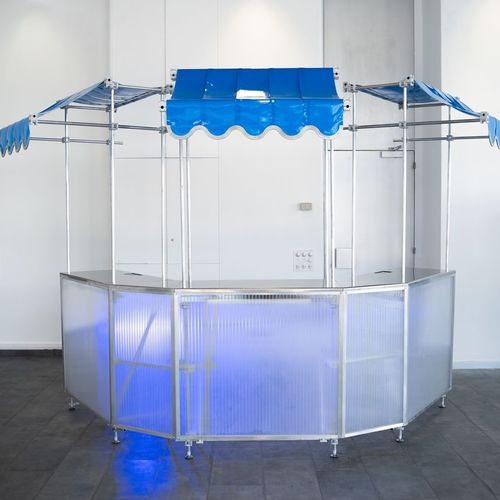
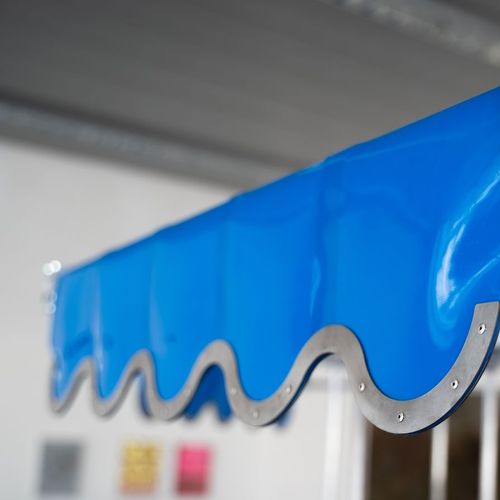
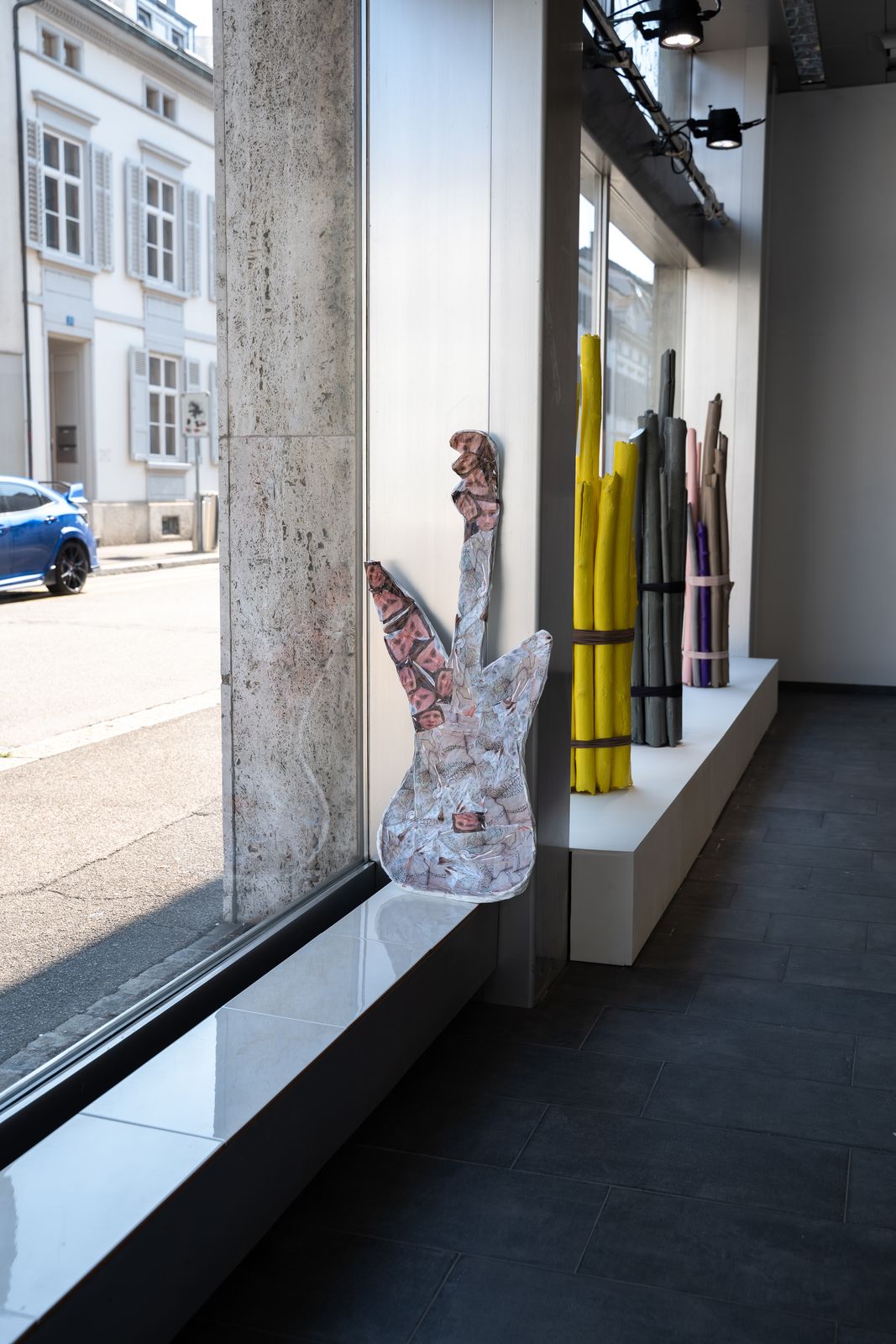
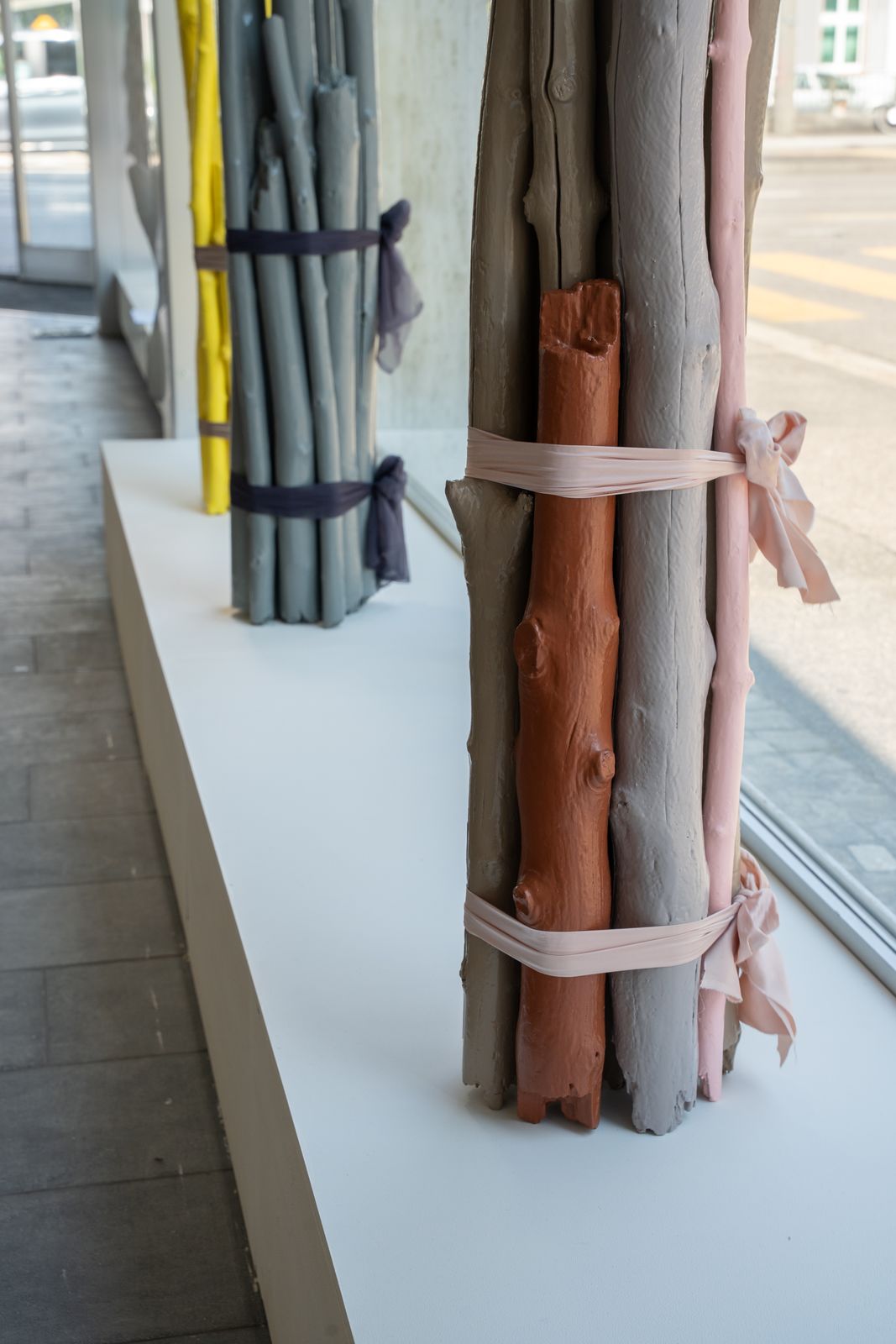
In Etienne Eisele’s sculptural practice, souvenirs of commercial rhetoric
reappear as spatial saboteurs.
Luschen I is a mirrored plaque installed at the
gallery entrance, scrawled ‘Good Luck!’ in a bright, reflective orange. A crafty
double fallacy, Eisele’s work is at once caustic and affecting, made deep
by a claim to being not that deep at all.
Luschen I strains our gaze upwards,
introducing the exhibition through the prism of our own faces shining in its
selfie-ready gloss, as cold words and warmly shaded content loom with no
clear direction, nor director. Evasiveness—oblique displacement—proves
hella helpful to asserting personal value at the fringes of identification. The
more quotidian, the more discursive: Lou-Anna Ulloa del Rio’s
Porcelaine
comprises an enlarged silver clip propping up a tall scrim of tracing paper.
A column of white lies,
Porcelaine’s metal fastener is actually painted wood,
its tissue skirt shaped to seem as sturdy as a curtain. These uncertain
illusions, skeptical of their own sources, are guided by an impulse less to
pull one over than to pull, to tug at a corner of private imagination, verifying
that it holds, a careful test of depth perception.
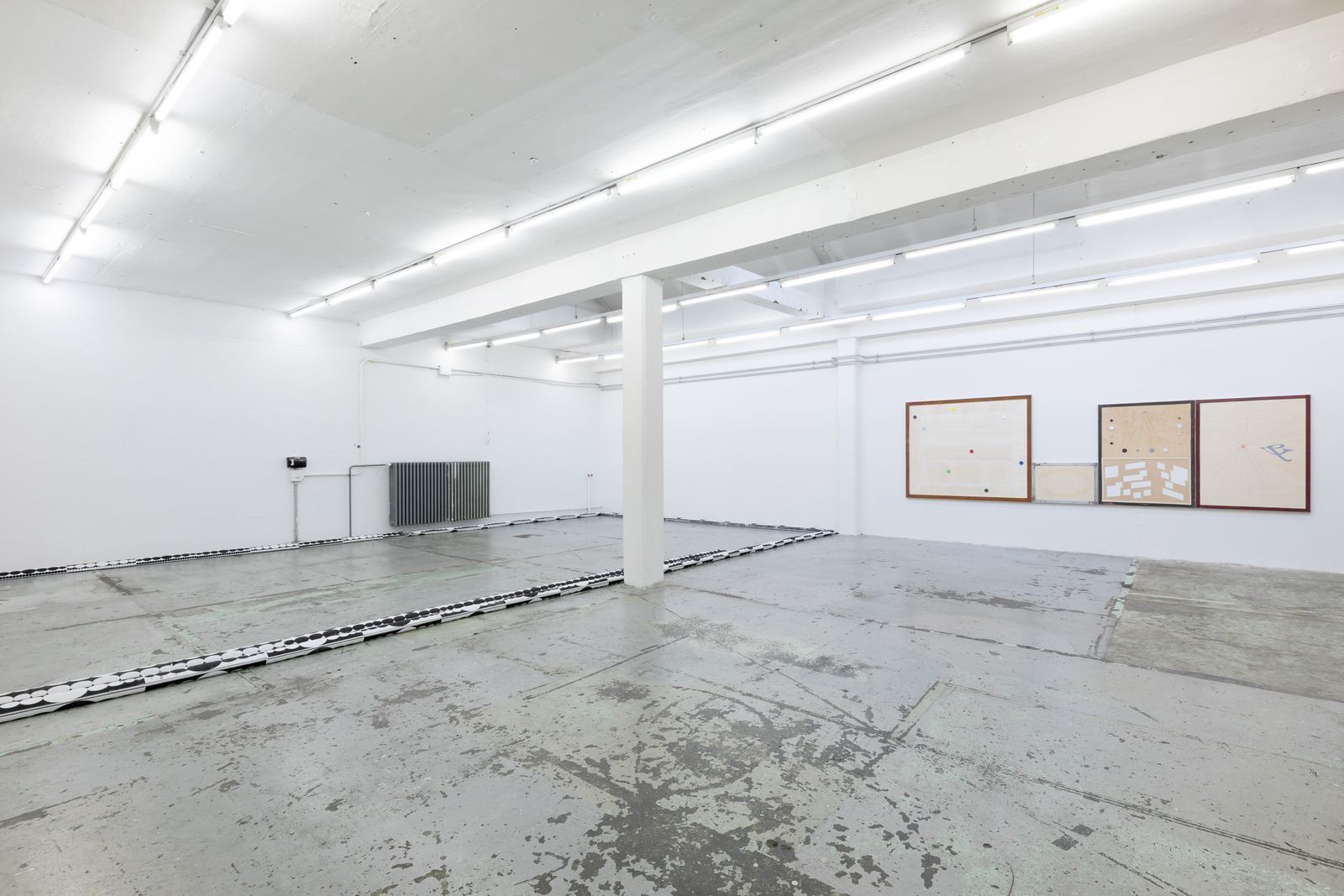
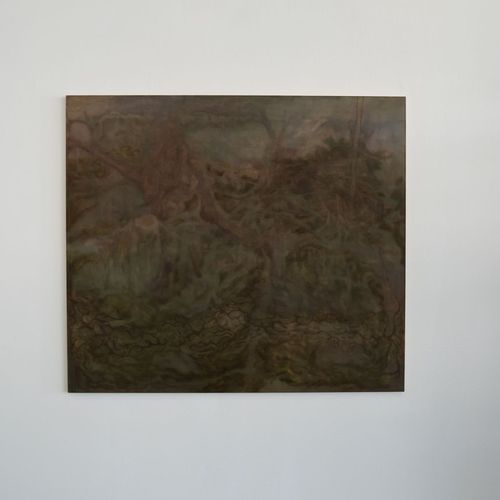
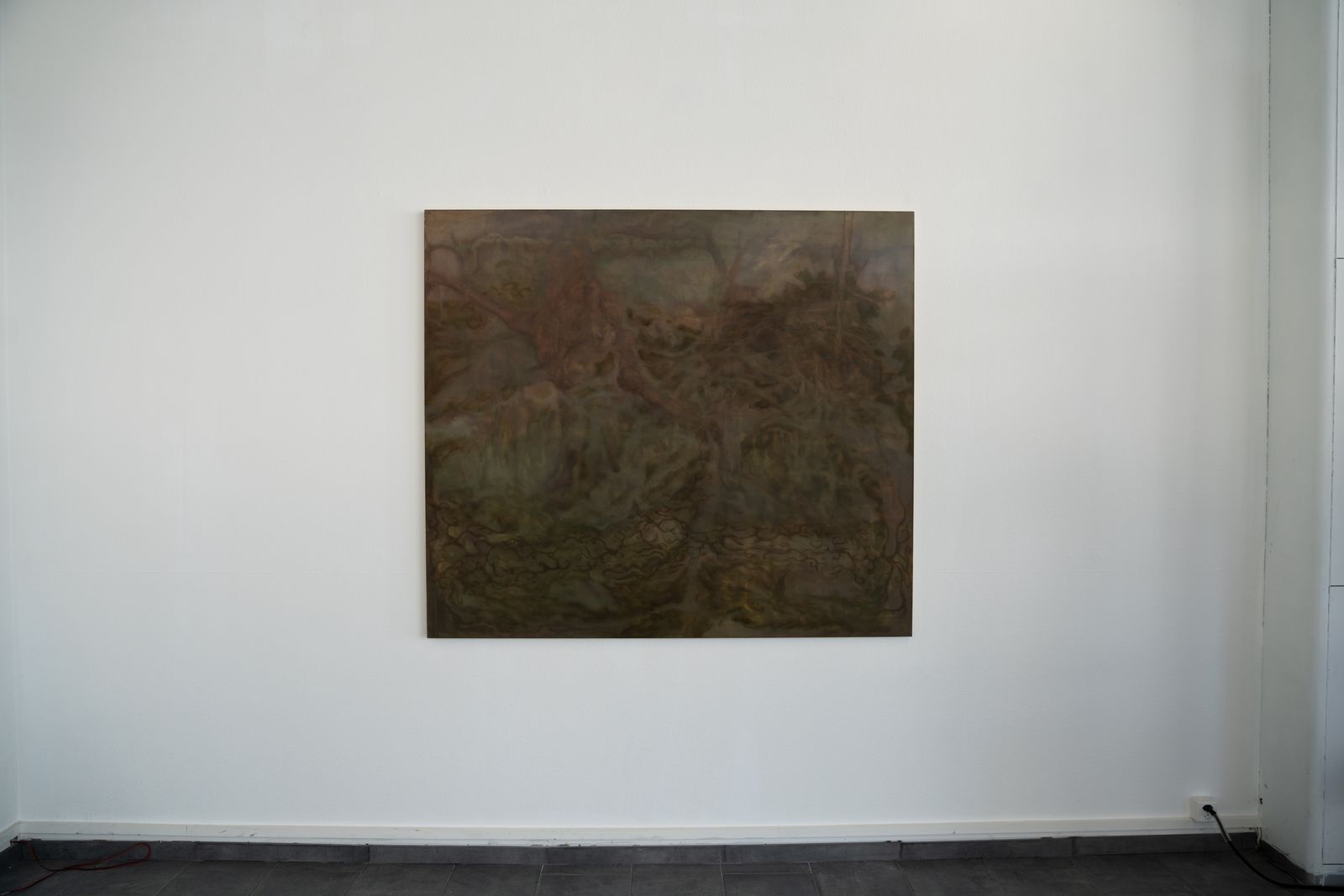
That protective slyness is elaborated by Camille Lütjens in a painting idiom
of mixed metaphors: her
Clumsy Choreography suggests a map textured
by a crinkly black river and sectioned with a shiny blue bow; in the more
ominously titled
Candy Coercion (2022), icons of digital engagement and
physical fact are interjected for tension, in comparing how hard it is to
make a ‘move,’ any move, on either turf. Analysis paralysis is on par with
medium and moment; not even reversions to nature, with
Choreography’s
camouflage-style ground and a frosty cloud in
Coercion, allow for
breathing room between layers, pasteurized by screen-fleek-realness mode.
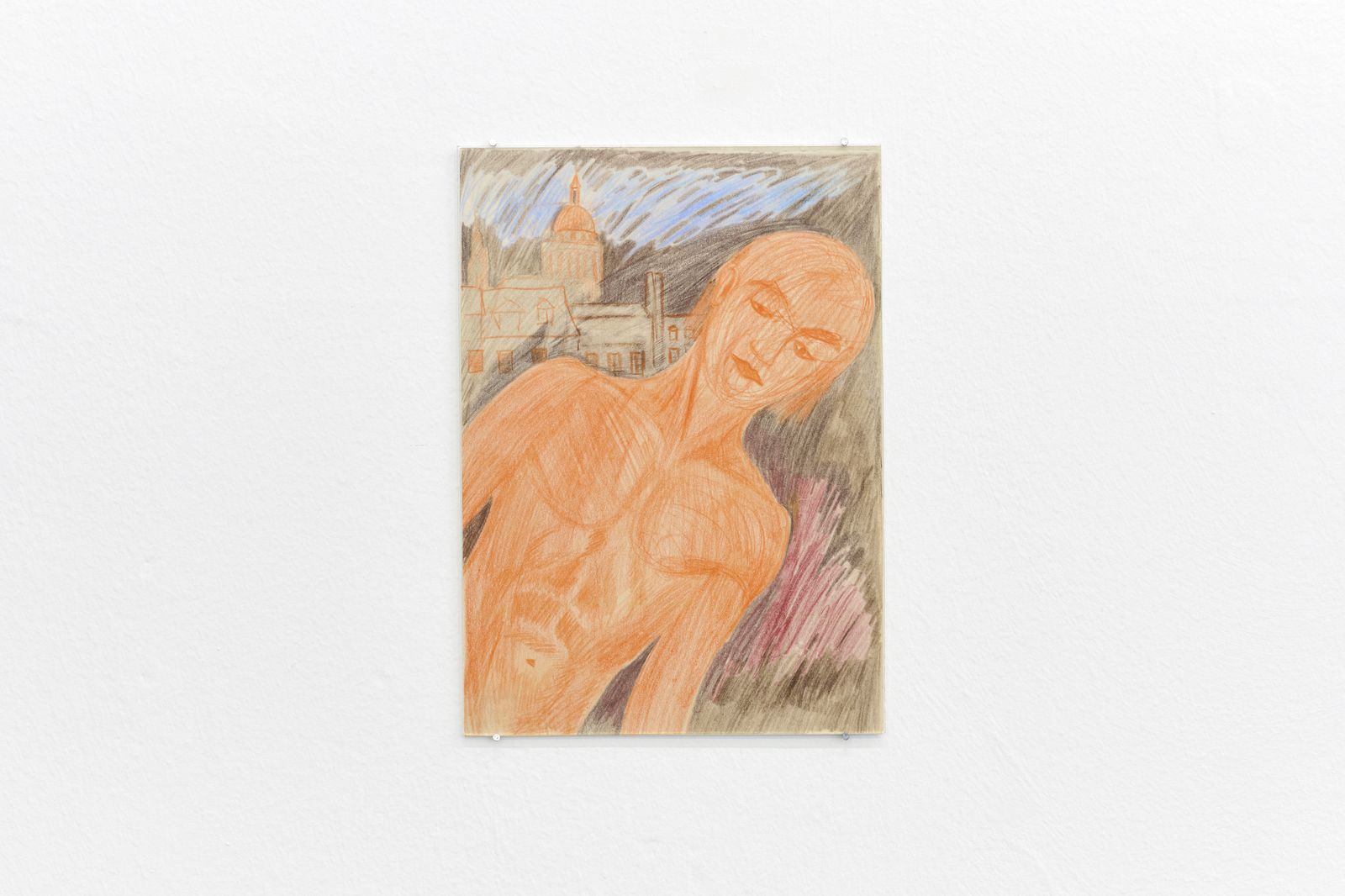
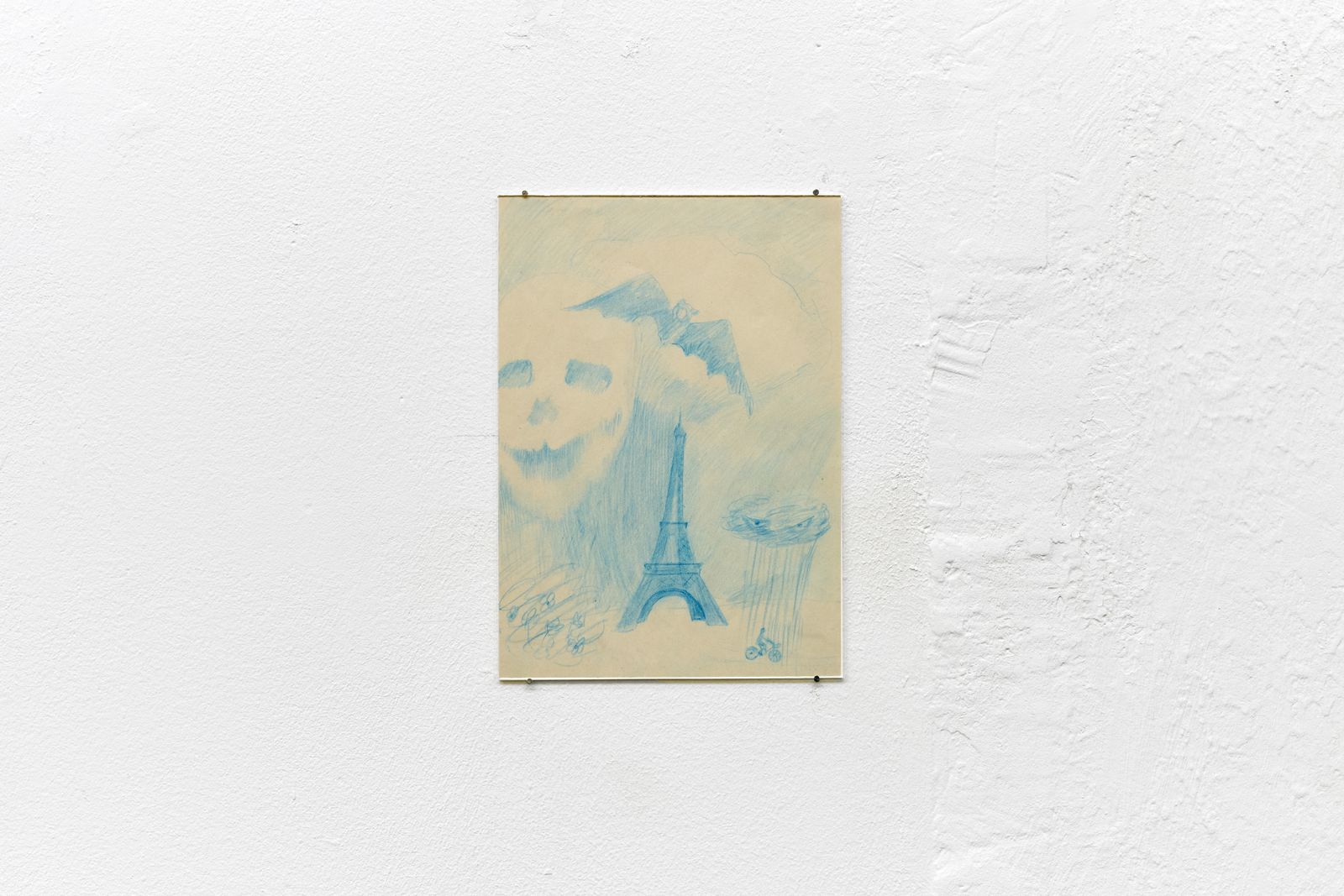
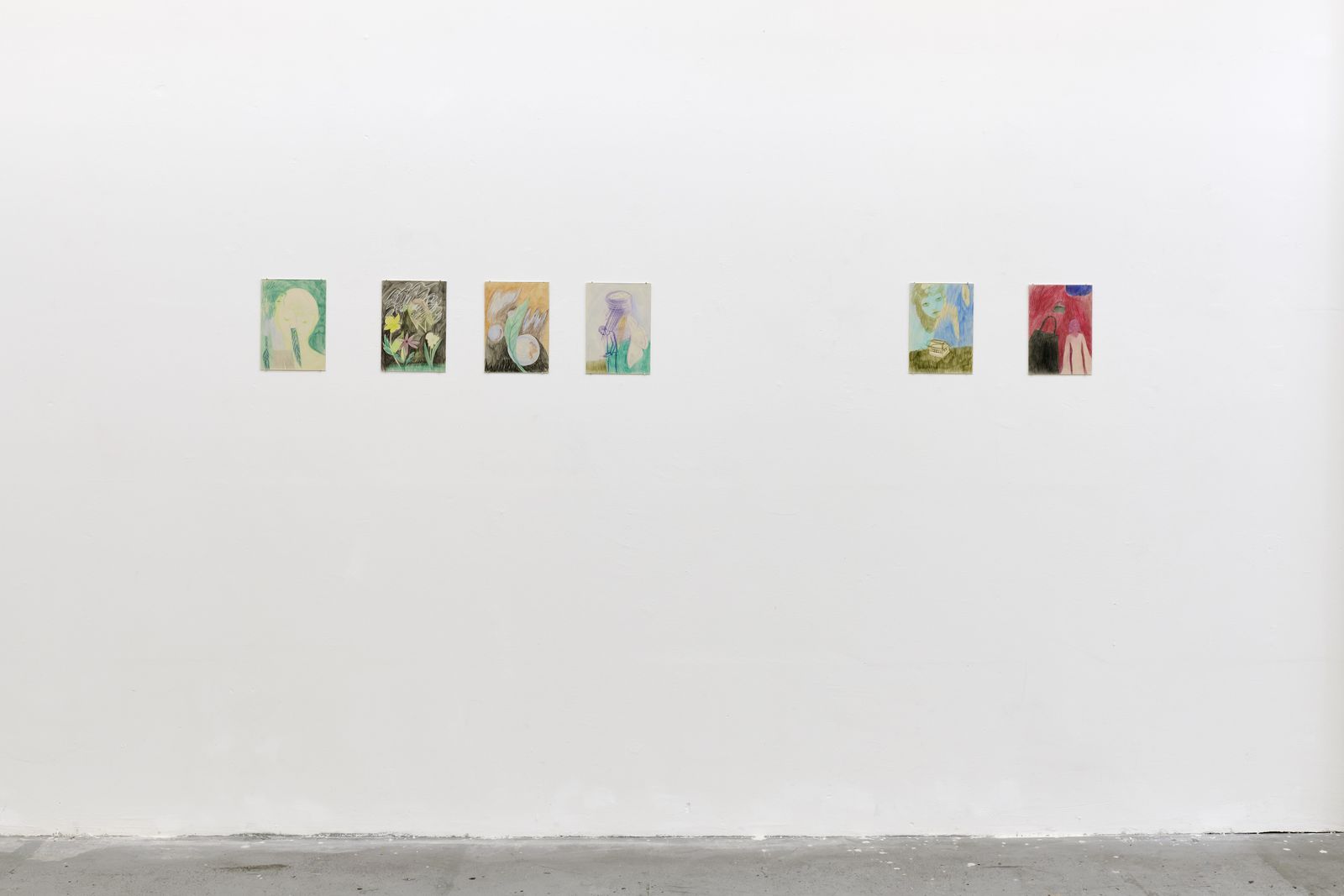
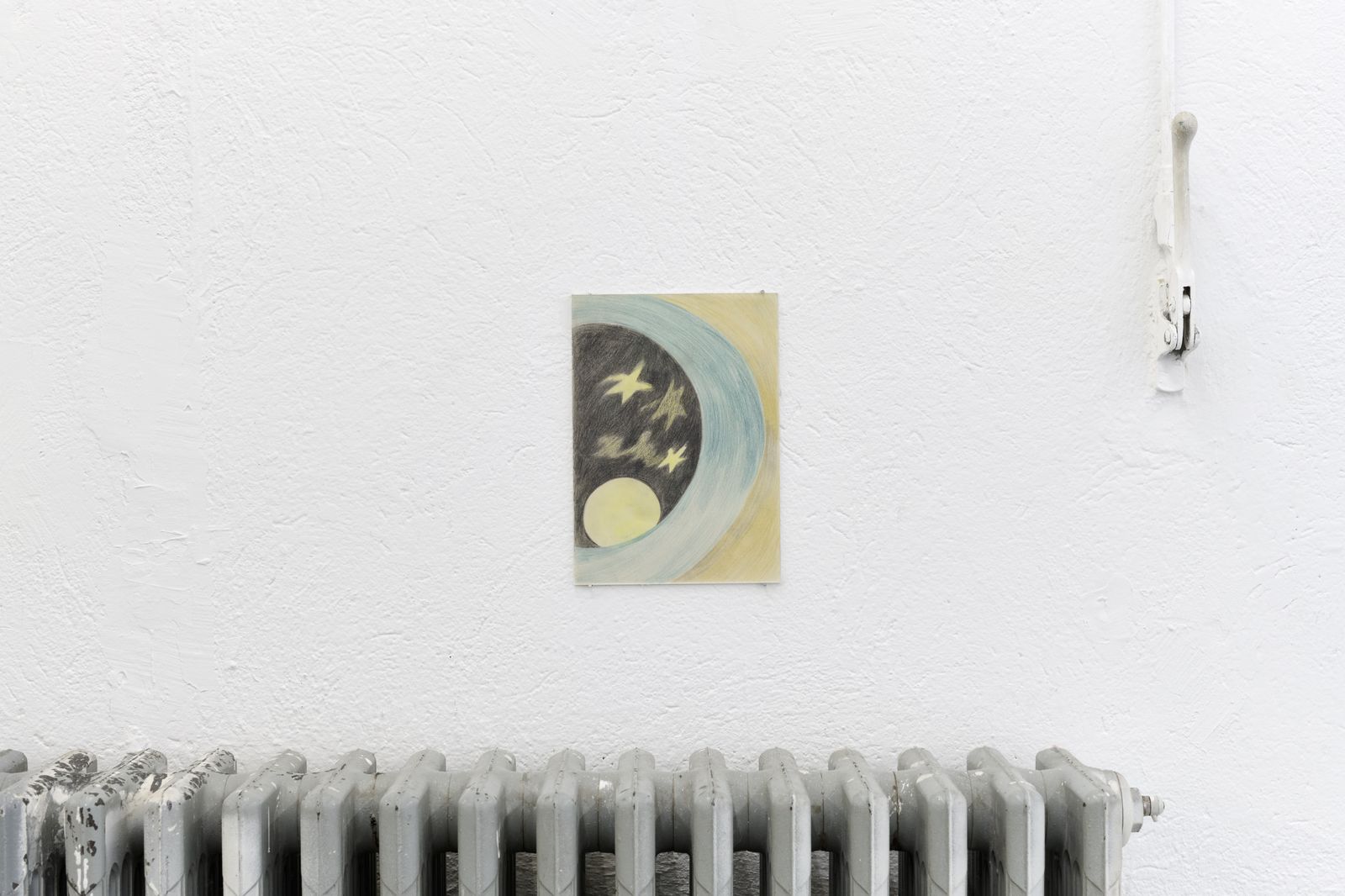
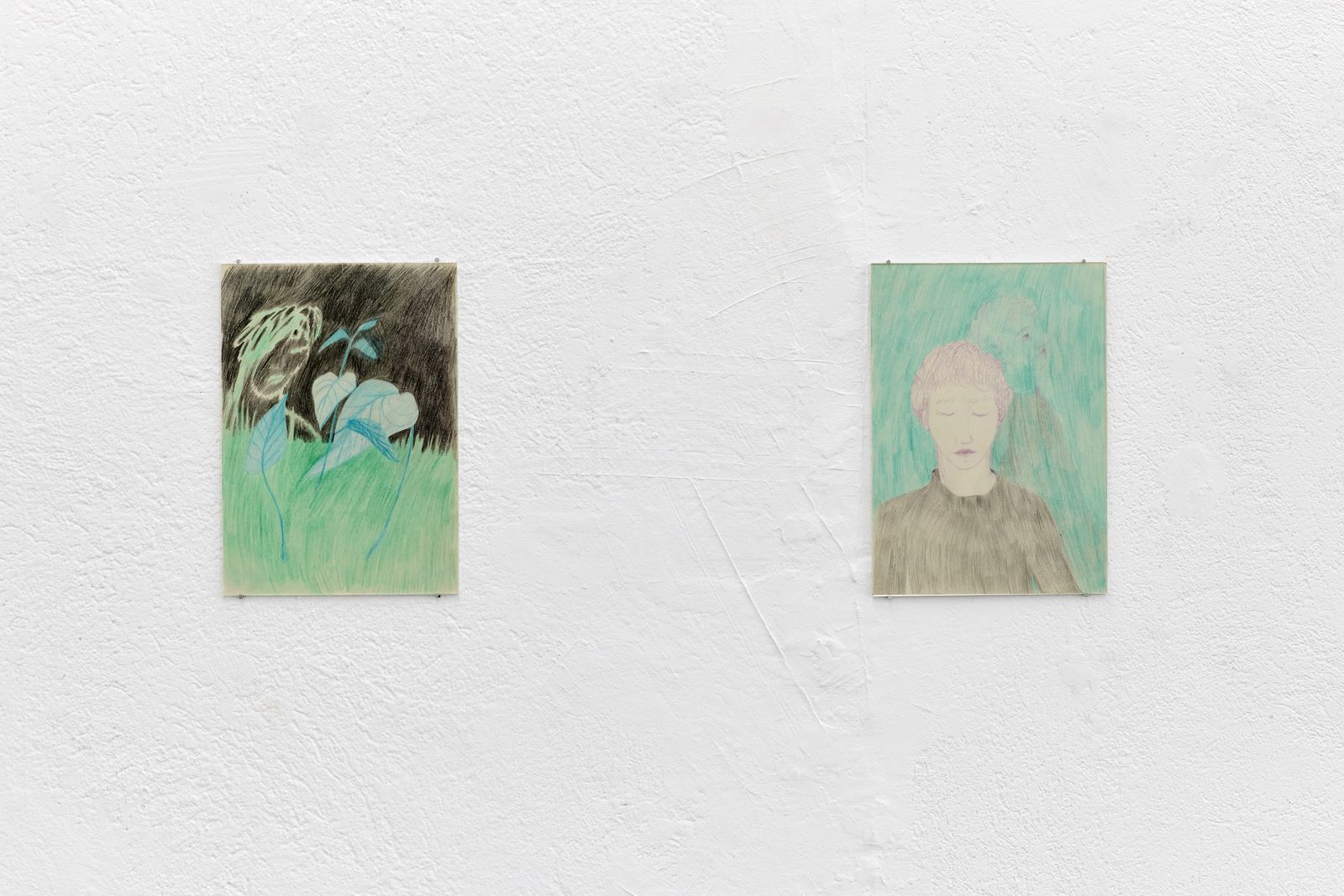
Jordan Selophane’s drawings pursue a similar hall of mirrors effect in a
more liberated tone, presenting axonometric views of categorically stuffy
Wunderkammer gone sketchy, reclaimed as comic and playful—exaggerated,
therefore ‘girl’. These works
(Where are they?, Another room) are populated
by lips and stars, keyholes and frames, motifs isolated for elusive flavor and
a light chew. Deposited in a set of warped architectures, they evoke mobile
cubicles imaged like cubicle decor, with the hot colors and confident strokes
of Rachel Harrison’s Amy Winehouse multiples, minus any Picasso stencils.
Online performance is so micro and refractive, it can’t be intertextual; the
histories that fray at Lütjens’ canvases free Selophane to devise new worlds.
Folding inwards in spiraling out, artists might render unstable terrain
semi-navigable by remaining half-glitched (Lütjens, Eisele) or proudly
hermetic (Selophane, Ulloa del Rio). With wrinkles of affinity built into digital
being adopted as artistic strategy, then as subject, then as point, perhaps
we would wish for a bigger splash, for Gramsci’s “morbid symptoms,” the
terrible things that happen between ages, to pass through our premises at
the level of the visual. I guess that’s what NFTs were for. Instead, here we
have a subtler proposal: borne from a culture stuck in traffic at whatever
nebulous junction where ‘foreigners everywhere’ meets core-core and post-post, works that exude a sincere self-sufficiency, a mood of thick
narration and also, ‘ain’t reading all that’, because well,
you know the vibe,
don’t you. Because who is not inclined to chic mythologizing when faced
with tough scores. Like all of us, they take up refuge in annotation and
encoding, awaiting a next chapter, a new wave of re-collection. To do it
again, each time more mega, more super, more top, and in reverse.

















ins/thumbnails/1.jpg)
ins/thumbnails/2.jpg)
ins/thumbnails/3.jpg)
ins/thumbnails/4.jpg)
ins/thumbnails/5.jpg)
ins/thumbnails/6.jpg)
ins/thumbnails/7.jpg)
ins/thumbnails/8.jpg)
ins/thumbnails/9.jpg)
ins/thumbnails/10.jpg)
ins/thumbnails/11.jpg)
ins/thumbnails/12.jpg)
ins/thumbnails/13.jpg)
ins/thumbnails/14.jpg)
ins/thumbnails/15.jpg)
ins/thumbnails/16.jpg)
ins/pics/1.jpg)
ins/pics/2.jpg)
ins/pics/3.jpg)
ins/pics/4.jpg)
ins/pics/5.jpg)
ins/pics/6.jpg)
ins/pics/7.jpg)
ins/pics/8.jpg)
ins/pics/9.jpg)
ins/pics/10.jpg)
ins/pics/11.jpg)
ins/pics/12.jpg)
ins/pics/13.jpg)
ins/pics/14.jpg)
ins/pics/15.jpg)
ins/pics/16.jpg)